

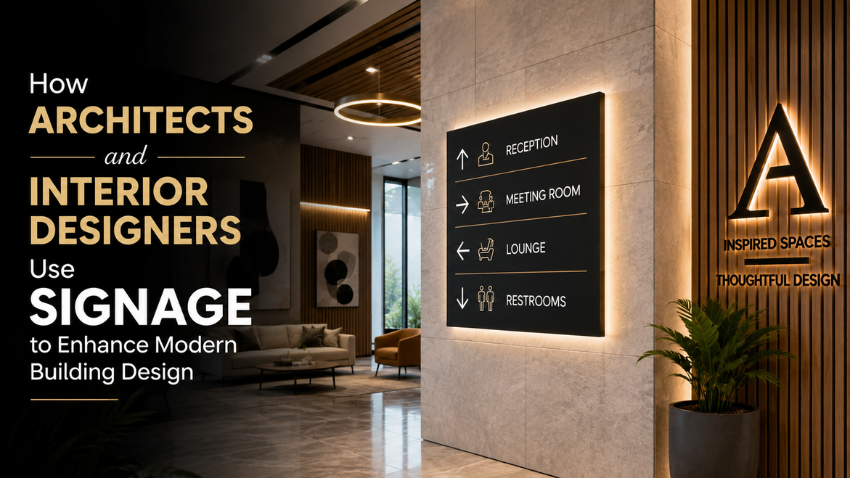
Modern building design is not just about creating visually appealing structures; it is about creating spaces that are functional, meaningful, and easy to experience. Every element, including materials, lighting, interiors, and signage, contributes to the overall impact of a building. Today, architects and interior designers consider signage as an important design element that improves communication, strengthens identity, and enhances the user experience.
Signage has evolved beyond displaying names and directions. It has become a creative feature that adds character to commercial buildings, offices, hospitals, hotels, retail spaces, and public environments. When planned properly, signage becomes a natural part of the architecture rather than an additional element.
The Role of Signage in Modern Architecture
Architects use signage to complement the design language of a building. The right combination of materials, typography, colors, and lighting helps create a consistent visual identity. Modern spaces often use sleek metal lettering, illuminated signs, and customized displays to reflect professionalism and style.
By integrating signage during the early stages of design, architects can ensure that it blends seamlessly with the structure and enhances the overall appearance of the space.
Improving Navigation and User Experience
One of the primary purposes of signage is to guide visitors effectively. Large buildings such as hospitals, shopping malls, corporate offices, and educational institutions require clear wayfinding systems to help people move around easily.
Directional signs, room identification boards, and information displays improve accessibility and reduce confusion. Proper placement and clear design ensure that visitors can quickly find their destination, creating a smoother and more comfortable experience.
Signage as Part of Interior Design
Interior designers use signage to enhance the look and feel of a space. Instead of treating signs as separate additions, they incorporate them into the interior theme to create a balanced and attractive environment.
Materials such as acrylic, wood, glass, stainless steel, and LED lighting allow designers to create signage that matches different styles. Whether it is a warm and welcoming hospitality space or a modern corporate office, the right signage design adds value to the interiors.
Strengthening Brand Identity
Signage plays an important role in building brand recognition. Exterior signs create the first impression of a business, while interior signs continue the brand experience throughout the space.
Reception signs, lobby displays, wall graphics, and branded directional signs help businesses communicate their identity and professionalism. A well-designed signage system creates a memorable experience and helps brands stand out from competitors.
Importance of Custom Signage Solutions
Every building has unique requirements, making customized signage an important choice for architects and designers. Custom signage allows businesses to create solutions that match their brand, architecture, and functional needs.
With modern technologies such as 3D lettering, LED displays, and digital signage, designers can create innovative solutions that are visually attractive, durable, and effective.
Conclusion
In modern architecture, signage is no longer just a way to provide information; it is a powerful design element that shapes how people interact with a space. Well-planned signage improves navigation, enhances aesthetics, and strengthens brand identity while creating a memorable experience for visitors.
For businesses looking for professional Custom Signage Solutions in Hubli, working with an experienced signage partner can help achieve the right balance of creativity, functionality, and durability. Sign Studio delivers innovative solutions with expertise in architectural signage, helping businesses create impactful visual identities that enhance their buildings and leave a lasting impression.